When you’re out in the mountains, your headtorch isn’t just a convenience—it’s a vital piece of safety gear. Whether you’re hiking before dawn, descending after sunset, or navigating an unexpected delay, a reliable light source can make all the difference. Here are a few key features to look for when choosing a headtorch for mountain use.
How Bright Should Your Headtorch Be for the Mountains?
Brightness, measured in lumens, is one of the most important considerations when choosing a headtorch for mountain adventures. The ideal output depends on the terrain, conditions, and how far ahead you need to see. Here’s a breakdown for common mountain activities:
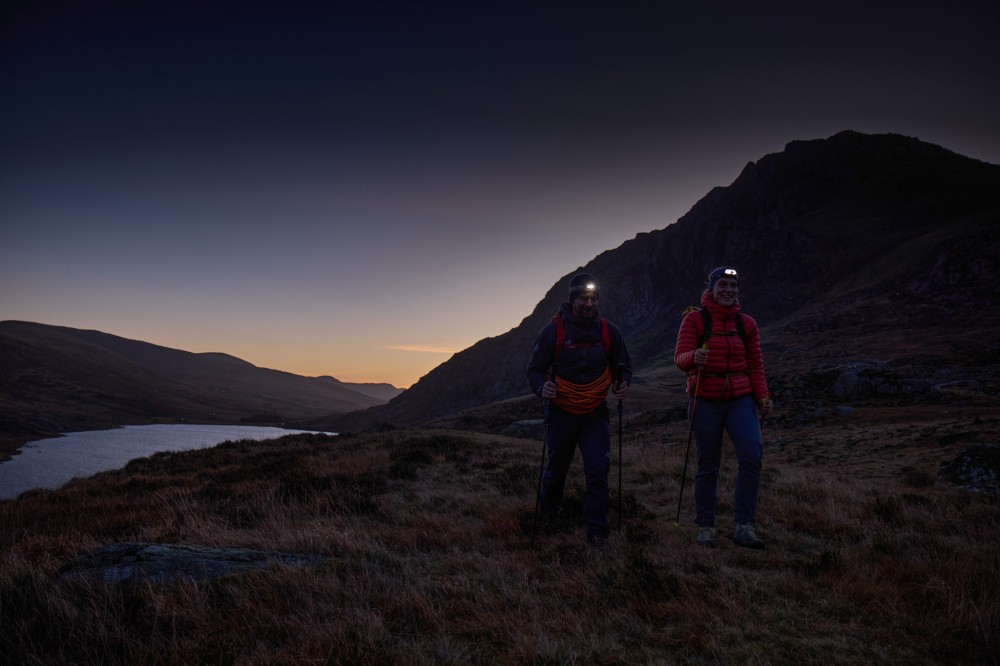
- Mountain Walking & Trekking: For night approaches, early starts, or long descents, a torch with 200–300 lumens is usually sufficient. This provides clear illumination of the path, rocks, and obstacles without draining your battery too quickly.
- Rock Climbing & Scrambling: When you’re moving over technical terrain or need to see handholds and footholds or route find in complex mountain terrain, aim for 300–500 lumens. A torch with a focused beam and multiple brightness modes helps you switch between close-up navigation and scanning the route ahead.
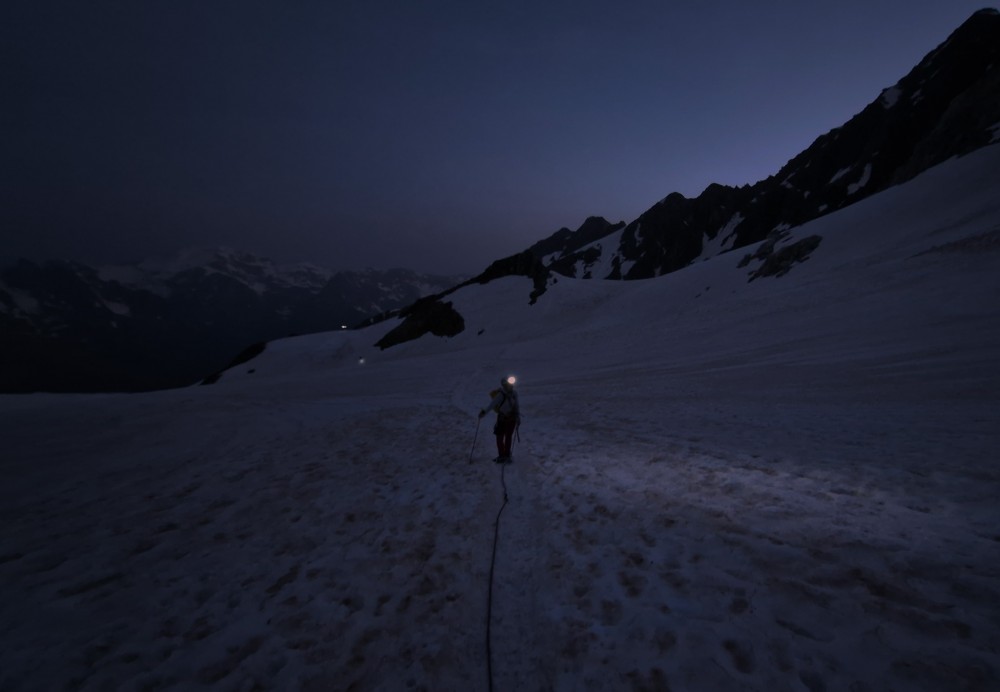
- Mountaineering & Alpine Expeditions: For glacier travel, high-altitude peaks, or extended overnight climbs, you’ll want 500 lumens or more. A high-output torch ensures you can see crevasses, route markers, and distant features in low-light or extreme weather conditions. Look for models with adjustable beams, so you can conserve battery on easy ground and boost the light when necessary.
Tip: Always balance brightness with battery life. A super-bright torch is useless if it dies halfway through your climb, so carry spare batteries or a backup torch for peace of mind.
Battery or Chargeable
When buying a headtorch, one of the first decisions you’ll need to make is how it’s powered. Do you go for a built-in rechargeable battery, a model that takes replaceable batteries, or a hybrid system that offers both? Let’s take a closer look at each option.
Built-in Battery Headtorches: These models offer a great all-in-one solution. Because the battery is sealed inside, they typically offer better protection against water ingress and are often lighter and more compact. The main drawback is that once the battery runs out, you can’t simply swap in new ones—you’ll need to recharge it.
Built-in battery headtorches are ideal for Alpine raids, challenge events, high-altitude climbs, or as part of an emergency kit, where simplicity and weather resistance are key.
Built-in battery headtorches are ideal for Alpine raids, challenge events, high-altitude climbs, or as part of an emergency kit, where simplicity and weather resistance are key.
Replaceable Battery Headtorches : A headtorch that takes standard batteries gives you more versatility—you can carry spares or use rechargeable batteries for extended trips. This makes them perfect for long nights on the trail, 24-hour challenges, or night shifts where quick battery changes are essential.
However, there are a few trade-offs: you might forget to pack spare batteries, they can corrode if left inside for too long, and the design is often less waterproof because of the removable battery compartment.
However, there are a few trade-offs: you might forget to pack spare batteries, they can corrode if left inside for too long, and the design is often less waterproof because of the removable battery compartment.
Hybrid Battery Systems : Hybrid headtorches offer the best of both worlds. They can run on either a rechargeable USB battery pack or standard disposable batteries, giving you the flexibility to adapt to your environment. If charging options are limited—like on a remote expedition or multi-day trek—you can simply switch to regular batteries. Like the replaceable battery option, these battery options are also great for challenge events including Welsh 3000s
Lock Function
A common frustration for many mountain-goers is discovering that your headtorch has accidentally switched on in your pack, draining the battery before you’ve even started. Thankfully, many modern models include a lock function to prevent this. It’s a simple but essential feature that ensures your torch is ready when you need it most.
Brands like Silva make this especially easy to use. To activate the lock, just hold down the power button—a small red LED will appear to show the torch is locked. When you’re ready to use it, hold the button again until the LED turns green, then press once more to power it on. It’s a quick, reliable way to keep your light secure during transport and save valuable battery life.
Weather Resistance (IP Ratings)
Mountain weather can change in an instant, so your headtorch needs to handle rain, sleet, and snow without failing. That’s where IP ratings come in.
“IP” stands for Ingress Protection, and it’s followed by two numbers that show how well a product is sealed against dust and water.
Here’s how it works:
- The first number (0–6) shows how resistant the device is to solid particles like dust or grit. If it's X then it's not tested for dust ingress.
- The second number (0–8 or 9) shows how resistant it is to water.
For example:
IPX4 | Splash resistant – can handle rain or light moisture. |
IPX6 | Protected from powerful water jets – suitable for heavy rain. |
IPX7 | Waterproof – can survive being submerged up to 1 metre for 30 minutes. |
IP67 | Fully dust-tight and waterproof up to 1 metre. Excellent for harsh, wet conditions. |
IP68 | Fully dust-tight and highly waterpoof. Excellent for long periods in poor weather. |
For mountain use, look for at least IPX4, but if you’re heading into particularly wet or snowy areas, something rated IPX6 or IPX7 will offer better protection and peace of mind.
Always Carry a Backup
Even the best gear can fail. Always pack a small backup torch just in case your headtorch packs up. We use the Silva Smini and find its a great cmobination of lightweight mixed with functionality.
Finally, keep your headtorch and spare batteries stored in a dry bag inside your pack. It’s a simple step that ensures your light source stays functional and ready for whatever the mountains throw your way.
Because when the sun goes down, your headtorch becomes your lifeline—so make sure it’s one you can trust.
What’s in My Pack
At the moment, my go-to headtorch is the Silva Explore 5. It’s IP68-rated, delivers 700 lumens, and has all the features I rely on in the mountains: long battery life and a lock function to prevent it from accidentally turning on in my pack.
For a backup, I carry the Silva Smini. It’s IPX5, lightweight, USB rechargeable, and more affordable, making it a perfect spare that’s easy to keep ready for long trips or unexpected situations.
About the author
Matt Cooper is the Founder of The Mountaineering Company and a passionate advocate for enhancing mountain safety and empowering people to enjoy bigger and safer mountain adventures. He is a fully qualified Mountaineering Instructor, certified Summer and Winter Mountain Leader, and an active member of Mountain Rescue.
you may also be interested in...
Blog Category
- View All
- Climbing
- Climbing Skills
- Expedition Reports
- Expeditions
- Gear Review
- Gear Reviews
- Isle of Skye
- Mountain Running
- Mountain Skills
- News
- Newsletter
- Reviews
- Running Skills
- Skills
- Tech Tips
- Trek Reports
- Walks
- Winter
- Winter Climbing
- Winter Walking
- A coffee addicts guide to making the perfect brew in the mountains.
- West Coast Winter Adventures 2019
- A Record-Breaking Spring for The Mountaineering Company in North Wales
- Trek Summary: Jbel Toubkal and High Atlas Adventure June 2025
- ZOLEO Satellite Communicator Review: The Smart Choice for Off-Grid Messaging
- From Trail to Summit: The Essential Headtorch Guide for Hikers and Climbers
- Tryfan North Ridge vs South Ridge: Which Scramble Is Right for You?
- Winter Round-up for The Mountaineering Company 2026